📑 Table of Contents (18 sections) — Tap to expand
⚡ Quick Takeaway (Position-0 Summary)
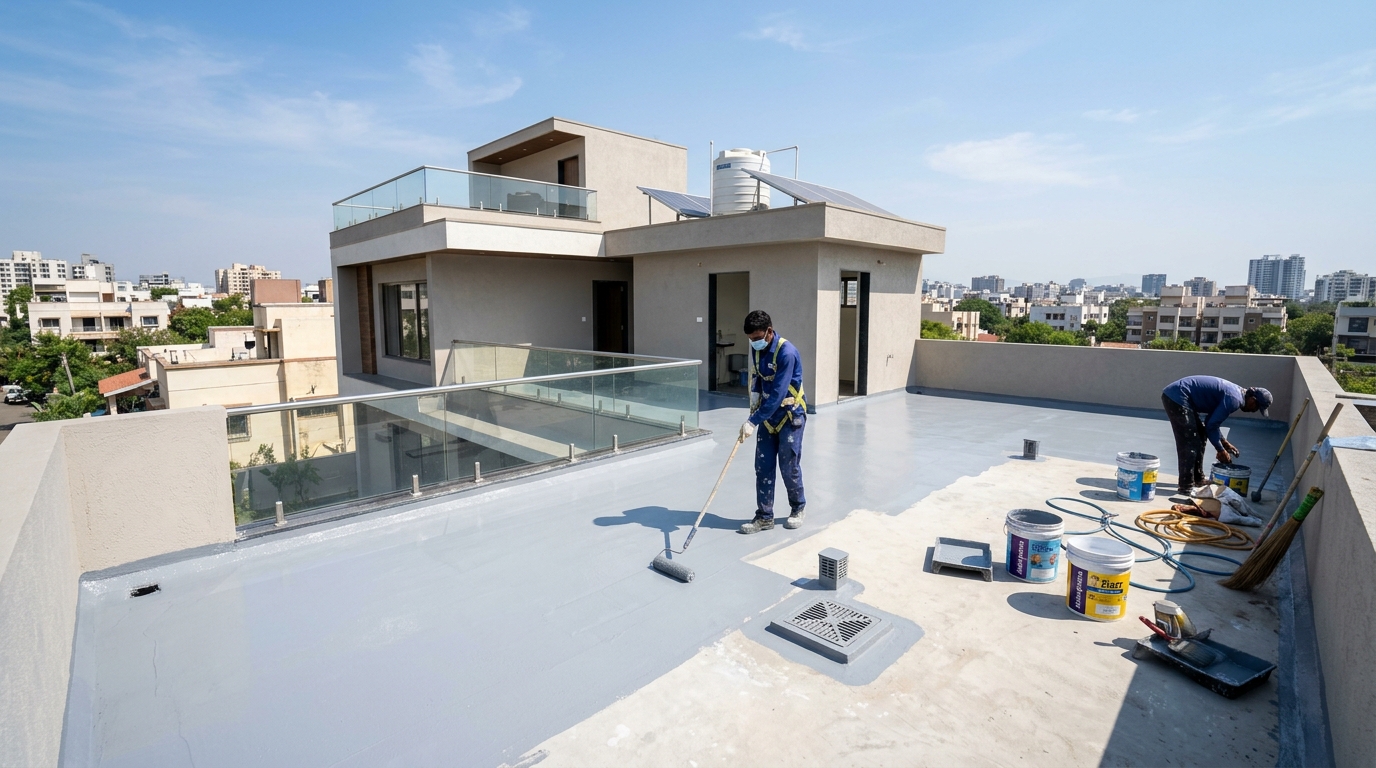
Never apply waterproofing chemicals over loose dust, moss, or active hairline cracks without surface grinding and polymer modified mortar repairs. Liquid elastomeric polyurethane/acrylic membranes cost ₹45–₹90/sq.ft, while APP bituminous membranes cost ₹65–₹110/sq.ft. Ensure parapet wall flashing (coving) reaches at least 300mm high and mandate a 48-hour ponding flood test before final contractor payment.
⚠️ Critical Safety Warnings & Precautions
Ensure all rooftop workers use safety harnesses and non-slip rubber footwear. Never carry out torch-applied bituminous membrane work near overhead electrical cables, gas vents, or dry debris.
A ceiling stain after the first heavy rain often sends the household looking for a bucket of waterproof paint. But water may be entering through a terrace crack, a pipe penetration, a damaged outlet or a poorly finished parapet junction.
The stain tells you where the water has appeared. It does not necessarily show where it entered.
A lasting repair starts with an inspection of the whole terrace and the way it drains. This guide explains the main choices, how to compare contractor quotations and what to check before the work is covered by tiles or another finish.
Finding the cause of terrace leakage
Walk through the problem with a competent waterproofing contractor. Note when the stain appears, whether it follows rain and whether it is near a bathroom, water tank or pipe route.
Water from an internal plumbing leak needs a different investigation from rain entering through the roof. Photograph the affected rooms and terrace details, and keep a record of when the marks change.
On the terrace, inspect outlets, corners, pipe penetrations, visible cracks and the junction between the roof and parapet. Look for water that remains after rain.
Dr. Fixit identifies slope, drainage, surface condition, cracks and expected foot traffic as important factors in selecting a terrace system. A new coating should be chosen after these conditions are understood. [1]
Widespread cracking, loose concrete, exposed reinforcement or a sagging slab needs appropriate structural assessment. A surface coating is not a repair for structural distress.
Comparing waterproofing systems
There is no universally best bucket or membrane for every roof. The intended surface, existing layers, exposure and future use determine the choice.
| System family | A reason it may be considered | Detail to discuss |
|---|---|---|
| Liquid-applied membrane | Terraces with complicated junctions and penetrations | Substrate preparation, reinforcement and required consumption |
| Cementitious or polymer-modified system | Compatible mineral surfaces and specified protected assemblies | Flexibility, curing and whether a protective finish is required |
| Sheet membrane system | Projects designed around a continuous membrane layer | Seams, terminations, penetrations and protection |
| A protected waterproofing assembly | Terraces with regular use or a planned finished surface | Membrane protection, drainage and added load |
| Local repair within an existing system | A genuinely isolated defect in an otherwise sound roof | Compatibility and evidence that the wider system is serviceable |
For example, Sika lists liquid-applied roof membranes with different uses and system requirements. The product data sheet, rather than the word “waterproof”, establishes where and how the material should be applied. [2]
A coating intended to remain exposed may differ from one that must be protected. A terrace used for regular gatherings or a garden also faces different demands from an occasional-access roof.
Ask about UV exposure, standing water, expected movement and permitted traffic. A coating’s stated resistance to ponding does not remove the need to address poor drainage.
Avoid mixing products from unrelated systems without written compatibility guidance. The cheapest material substitution can undermine the agreed assembly.
Understanding area and cost
Measure the horizontal terrace and identify which vertical junctions, upstands and parapet faces are included. Ask how outlets, corners and equipment bases are priced.
A quote based only on floor area can omit the details where water is entering. It can also omit removal of failed layers, repairs, slope correction and protection.
Published square-foot prices are useful only when the system build-up is comparable. Dr. Fixit’s terrace guidance distinguishes exposed coatings and systems with additional protective finishes, which helps explain why apparently similar quotes can cover different work. [3]
The following fictional budget shows one way to itemise a 500 sq. ft. project. It is not a market rate or a recommendation for a particular system.
| Work item | Illustrative allowance |
|---|---|
| Cleaning and agreed surface preparation | ₹5,000 |
| Identified crack and junction repairs | ₹4,500 |
| Specified membrane system including application | 500 sq. ft. × ₹75 = ₹37,500 |
| Outlet and penetration detailing | ₹3,000 |
| Agreed protective finish | ₹10,000 |
| Subtotal before applicable taxes and other agreed charges | ₹60,000 |
In this example, slope reconstruction, major demolition and structural repairs are excluded. If the site needs them, the budget must change before work starts.
The material quantity also deserves attention. Ask for the treated area, specified consumption and number of layers in the approved system. “Two coats” is not enough information if each contractor plans to spread a different amount of product over the same roof.
Questions for the contractor
Ask the contractor to explain the likely entry points and the evidence supporting the diagnosis. A survey should produce more than a product name.
Get the product names, preparation method, treatment of cracks and junctions, planned consumption and finished surface in writing. Confirm who is responsible for clearing outlets and correcting drainage defects.
Discuss how the work will be checked before it is accepted. Any water test should be planned and supervised by the responsible professional, with the building’s condition and drainage considered. Do not improvise a deep flood test on a shared or unassessed roof.
Read warranty terms carefully. Ask what is covered, who responds to a complaint and whether maintenance, site conditions or workmanship are excluded. A long warranty headline does not explain the repair process.
Planning the work step by step
Structured Step-by-Step Execution Guide
- Step 1 - Document the problem: Record the stains and terrace condition. Note previous repairs and provide the contractor with any old product or warranty information.
- Step 2 - Decide how the terrace will be used: Tell the contractor about washing, drying clothes, furniture, water tanks, solar equipment or a future garden. The finished system must suit the intended use.
- Step 3 - Approve the repair specification: Agree what is being removed, repaired and retained. Set out drainage work, junction details, material quantities and the acceptance procedure.
- Step 4 - Choose a suitable weather window: Application and curing conditions vary by product. The contractor should follow the data sheet for temperature, substrate moisture and rain exposure.
Do not assume that all seasons described as “dry” are suitable everywhere in India. Coastal humidity, summer surface heat and cold conditions can affect work planning differently.
Structured Step-by-Step Execution Guide
- Step 5 - Inspect preparation before coating: Check that agreed loose layers and contaminants have been dealt with and that repairs and critical details are visible for inspection.
Photograph these stages. They become difficult to verify after the surface has been covered.
Structured Step-by-Step Execution Guide
- Step 6 - Apply and protect the specified system: The trained crew should follow the complete product instructions, including layer requirements and curing. Ask for records of the products and quantities used.
Keep traffic and other trades off the area for the period required by the chosen system.
Structured Step-by-Step Execution Guide
- Step 7 - Complete the agreed checks and handover: Carry out the acceptance procedure with the responsible contractor. Record unfinished details, maintenance instructions and warranty contacts.
If another trade will later install tiles, solar supports or planters, tell them where the waterproofing is and how it must be protected.
Completion and maintenance checklist
Before work:
Resolve the diagnosis, terrace use, drainage needs, specification and quotation.
During work:
Record preparation, junction details and product quantities before they are hidden.
After work: Keep the test record and warranty. Check outlets and visible damage periodically, especially before the main rainy season in your region.
Use safe access when inspecting. Leave roof-edge work, difficult outlets and work around electrical equipment to the appropriate professionals.
Troubleshooting & Common Problems: Troubleshooting recurring problems
The leak returns in the same place
Ask whether the original entry point was correctly identified. Water may be travelling from another part of the roof or from a service route.
Water stands on the new surface
Check outlet blockage and the drainage design. Repeatedly applying more coating does not correct an unsuitable slope.
The surface is damaged around planters or furniture
Review the system’s permitted traffic and protection requirements. Relocate or support items using an arrangement approved for the finished roof.
The contractor offers to coat over everything
Ask how adhesion and compatibility with old layers will be established. Keeping an existing layer should be a technical decision, not simply a way to shorten preparation.
Frequently asked questions
Waterproofing from inside the room
Some products can treat particular internal symptoms, but the rain-entry source should still be investigated. Discuss whether the proposed repair addresses the cause.
Choosing work only by a square-foot rate
Compare equal systems, preparation, junction treatment and finishes. A low rate with omitted repairs may cost more after the extras are added.
Waterproofing under terrace tiles
Tiles and grout alone should not be assumed to form the complete waterproofing system. Ask for the specified assembly and drainage details.
Planning a terrace garden
Review load, waterproofing, drainage and root protection with the appropriate professionals before building permanent beds or placing heavy planters.
Wrapping up
Begin with the water route and the condition of the terrace. Once those are understood, the coating or membrane can be selected as part of a complete repair.
A written specification, visible preparation and an agreed checking process make a quote easier to judge and a repair easier to maintain.
Related Guides & Services on Carpenterwala:
Sources and product guidance
Sources checked on 23 October 2026. Application details and acceptance procedures must follow the specified system and site assessment.
- [1] Dr. Fixit terrace condition and system-selection guidance
- [2] Sika India liquid-applied roofing membrane systems
- [3] Dr. Fixit guide to terrace waterproofing assemblies
- [4] Sikalastic 590 IN product and system information

Carpenterwala Editorial Team
Verified SpecialistHome Improvement Advisors
Our team of experienced coordinators and service verifiers writing expert tips for local Bangalore homes.
⚖️ DIY vs. Hiring a Professional: When to Call an Expert
✓ Safe to DIY
- Minor screw tightening or loose hinge lubrication
- Basic component replacement with matching dimensions
- Routine surface touch-ups and non-structural adjustments
⚠️ Hire a Verified Pro
- Structural woodwork warping, masonry drilling, or rotted frames
- High electrical voltages, MCB trips, or water line pipe bursts
- Multi-room installations requiring specialized power equipment
💬 Comments (0)