📑 Table of Contents (17 sections) — Tap to expand
⚡ Quick Takeaway (Position-0 Summary)
The key to a thriving apartment balcony garden in India is matching plant species to actual daily direct sunlight (North vs South/East/West facing). Use a lightweight potting blend of 40% garden red soil, 30% cocopeat (to reduce structural slab load), and 30% vermicompost/cow manure. Always elevate pots on planter stands or drainage saucers to safeguard terrace/balcony waterproofing and prevent stained tiles.
⚠️ Critical Safety Warnings & Precautions
Check your apartment balcony slab weight limits before placing massive ceramic or stone planters. Ensure all railing planters are secured with heavy-duty metal safety brackets to prevent falling pot hazards during high monsoon winds.
Balcony and Terrace Gardening for Beginners
Starting a manageable garden in your part of India
Gardening & Outdoor | Beginner Guide | Seasonal Planning
The first few pots are easy to buy. Keeping them watered through a hot week, moving around them on laundry day and finding space for the next plant takes more thought.
A good beginner garden starts small enough to care for. You can learn a great deal from a few well-placed containers before spending on a large vertical wall or a permanent raised bed.
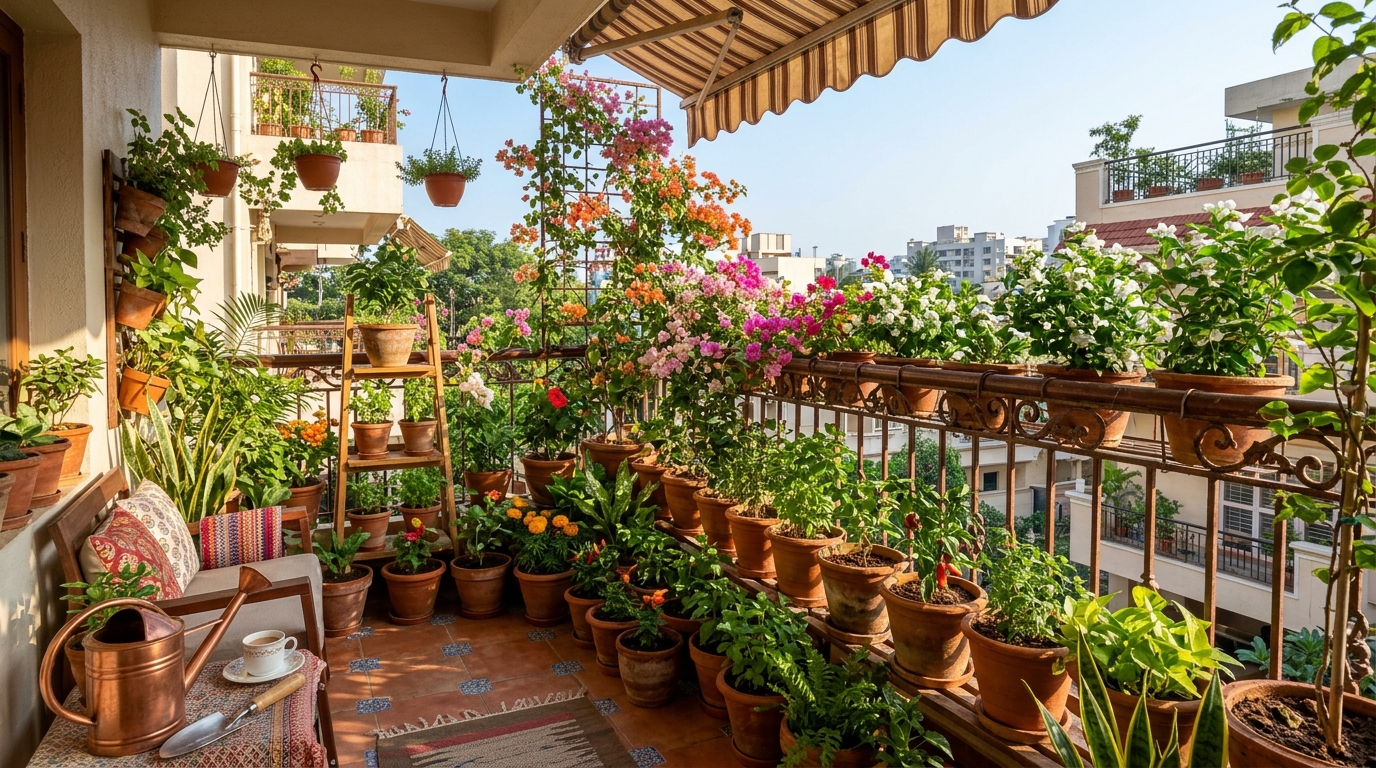
This guide helps you plan a balcony or terrace garden around your light, local seasons and daily routine. A sunny coastal terrace and a shaded balcony in a colder region will need different choices.
Checking the space before buying plants
Spend a few days observing the balcony or terrace. Note where direct sun falls in the morning, midday and late afternoon. A space can be bright without receiving much direct sunlight.
Look at the wind, available water and the route to the drain. Keep a clear walkway and access to outlets, equipment and doors.
For terraces and balconies, consider the weight of wet growing media, containers, water and any structures. Get building or structural guidance before adding heavy planters, masonry beds or large collections. Do not use a generic internet load figure as approval for your roof.
Check the waterproofing and drainage before arranging pots. A plant collection should not hide an outlet or make inspection impossible. Keep containers securely inside the balcony rather than balanced on an unprotected edge.
TNAU’s gardening guidance recommends matching pot placement to sunshine needs and checking drainage. Those two observations are a useful starting point even before you decide what to grow. [1]
Choosing plants for light and season
Pick plants for the conditions you can provide. Moving a sun-loving crop into a deeply shaded corner will not be corrected by buying more fertiliser.
| Space or condition | A sensible starting approach | What to verify locally |
|---|---|---|
| Good direct sunlight | A small trial of suitable seasonal vegetables or flowers | Crop variety, planting season and heat tolerance |
| Partial sun or filtered light | Selected herbs, leafy plants or ornamentals suited to that light | Actual direct-sun period and plant requirements |
| Deep shade | Suitable foliage plants rather than ambitious fruiting crops | Whether the location has enough usable light |
| Exposed windy terrace | Sturdy containers and a modest number of suitable plants | Secure supports and the need for an assessed windbreak |
| A spot that stays wet after rain | Resolve drainage before planting | Whether water is collecting under containers |
For an edible garden, choose a few things you actually use. Herbs or a small seasonal crop can be a practical beginning, provided the light and local weather suit them. Ask a good local nursery or agricultural extension source about the variety and planting window.
Adjust the plan to your region
In hot and dry conditions, small containers may lose moisture quickly. Observe the growing mix and plant response, and plan watering access before expanding.
In humid or heavy-rainfall periods, pay particular attention to drainage, spacing and air movement. Pots that were easy to water in summer may stay wet much longer during rain.
In colder regions, match planting to the local season and protect tender plants according to their requirements. A calendar written for a warm southern city should not be used unchanged in a place with frost.
Your balcony’s microclimate can differ from the general weather report. Watch the actual site, particularly when the season changes.
Selecting containers and potting mix
Start with containers you can move and clean around
Choose a size suited to the plant’s mature roots. A tiny decorative pot can be attractive but may leave little growing space.
Check drainage holes and the way water leaves the container. Use supports or arrangements that protect the underlying surface without blocking drainage.
TNAU notes that deeper-rooted plants need appropriately deep containers and recommends watering according to the moisture condition of the pot. [1]
Do not turn every container into a large water reservoir. If saucers are used, manage them so they do not remain full of stagnant water.
Buy a growing mix suited to containers
Heavy garden soil can compact in a pot. A container mix should balance drainage, air and moisture retention.
TNAU’s nursery guidance describes a suitable potting medium as open, well drained, moisture-retentive and sufficiently light. [2] The precise mix should suit the plant and the materials available locally.
You do not need one universal ratio for every plant. Ask what is in a ready-made mix and whether it contains nutrients. That avoids adding repeated fertiliser before understanding the starting medium.
Use mature compost from a reliable source. Avoid adding kitchen waste directly to a small pot simply because it is biodegradable.
Give supports a proper job
A climber may need a stable support, but a heavy trellis or vertical system also changes loading and wind exposure. Have substantial structures assessed.
Keep supports away from waterproofing details unless the fixing has been designed to protect them. A drilled hole can create a much larger problem than the plant solves.
Preparing a small starter budget
Buy enough for a manageable trial and leave room to learn. Several healthy plants with suitable containers are more useful than a crowded collection of unsuitable ones.
The following is a fictional allowance for a small garden. It is not a national retail price list.
| Item | Illustrative allowance |
|---|---|
| Six suitable containers or grow bags | ₹900 |
| Container growing mix | ₹900 |
| Seeds or small plants | ₹450 |
| Hand tool and watering arrangement | ₹550 |
| Surface-protection and drainage accessories | ₹400 |
| Basic supports and labels | ₹300 |
| Total illustrative starter allowance | ₹3,500 |
This excludes structural work, waterproofing repairs, permanent beds and automated irrigation. Size, material and local availability will change the actual bill.
A reliable nearby nursery is useful because plants can be checked before buying and the advice can reflect your local season. When ordering online, verify the mature plant size, container dimensions and delivery condition.
Setting up the garden step by step
Structured Step-by-Step Execution Guide
- Step 1 - Make a light and access plan: Mark the sunny positions, water source, drains and a clear walkway. Decide how many containers you can inspect and water comfortably.
TNAU’s kitchen-garden guidance includes sunlight, water access and the time available for care in the planning process. [3]
Structured Step-by-Step Execution Guide
- Step 2 - Choose a short plant list: Pick a few plants with similar care requirements. Check their mature size and seasonal suitability.
If you are starting from seed, sow a manageable quantity. Germinating an entire packet can quickly create more seedlings than the balcony can hold.
Structured Step-by-Step Execution Guide
- Step 3 - Prepare the containers and medium: Check drainage and use a suitable potting mix. Leave practical watering space at the top according to the container and crop.
Label plants and sowing dates. Labels are especially useful when several seedlings look alike.
Structured Step-by-Step Execution Guide
- Step 4 - Place plants and observe them: Position the pots according to light needs and the site plan. Avoid blocking drains or filling every gap.
Give plants room to grow, and make changes gradually when moving them between significantly different light conditions.
Structured Step-by-Step Execution Guide
- Step 5 - Develop a watering routine: Check the medium rather than following the same number of minutes every day. Container size, sun, wind and rain all change water use.
Water in a way that wets the relevant root zone and allows appropriate drainage. Avoid leaving the surface beneath the pots continually wet.
Structured Step-by-Step Execution Guide
- Step 6 - Add nutrition according to need: Follow the crop and product guidance. More fertiliser is not a reliable response to every yellow leaf or slow-growing plant.
Keep a simple note of what was added and when. Change one thing at a time where practical so you can see the result.
Structured Step-by-Step Execution Guide
- Step 7 - Expand only after the first group settles: Notice which plants fit the light and your routine. Repeat those successes before investing in a much larger setup.
Weekly care and holiday planning
Look under leaves, inspect new growth and check drainage. Remove dead material and keep tools and containers reasonably clean.
Avoid spraying an unidentified problem with a strong chemical or an improvised household mixture. Identify the pest or disease first and follow suitable local guidance and any product label.
For holidays, test the watering arrangement well before leaving. An automated kit should be checked under real conditions, including its battery or power needs and the way each container drains.
TNAU’s vertical-garden guidance also makes the choice of plants, growing media and irrigation part of the system design. A vertical display needs a maintenance plan just as much as a row of pots. [4]
Troubleshooting & Common Problems: Troubleshooting beginner problems
Leaves wilt even though the pot is wet
Do not automatically add more water. Check drainage, root condition, recent weather and the plant’s requirements. Seek local advice if the cause remains unclear.
Water runs straight through a hard root ball
Inspect the medium and root condition. A compacted or root-bound plant may need appropriate repotting rather than repeated quick splashes.
Plants grow tall and weak
Check whether the light suits the crop and whether plants are overcrowded. Fertiliser will not replace suitable light.
The balcony becomes difficult to use
Reduce the number of containers or rearrange them. A garden that leaves access for cleaning and watering is easier to keep healthy.
Frequently asked questions
Growing food on a shaded balcony
Start by measuring the light. Some plants tolerate partial shade better than others, but deep shade can limit edible-crop performance. Choose locally appropriate options.
Using the same planting calendar across India
Adjust for region, season and balcony conditions. Check local crop guidance before sowing.
Installing a permanent terrace bed
Have loading, waterproofing, drainage and root protection assessed before construction. Movable containers can be a more manageable starting point.
Beginning without automatic irrigation
A small garden can be watered by hand if the routine is practical. Add automation when it solves a clear need and has been tested.
Wrapping up
Start with the light, the drainage and the time you can give the garden. A few suitable plants will teach you more than a large shopping list.
As the seasons change, keep observing the space. The plants that thrive in your balcony’s actual conditions are the best guide to what you should grow next.
Related Guides & Services on Carpenterwala:
- [1] TNAU guidance on container placement drainage and watering
- [2] TNAU nursery and potting-medium guidance
- [3] TNAU kitchen-garden planning guidance
- [4] TNAU vertical-gardening systems and maintenance

Carpenterwala Editorial Team
Verified SpecialistHome Improvement Advisors
Our team of experienced coordinators and service verifiers writing expert tips for local Bangalore homes.
⚖️ DIY vs. Hiring a Professional: When to Call an Expert
✓ Safe to DIY
- Minor screw tightening or loose hinge lubrication
- Basic component replacement with matching dimensions
- Routine surface touch-ups and non-structural adjustments
⚠️ Hire a Verified Pro
- Structural woodwork warping, masonry drilling, or rotted frames
- High electrical voltages, MCB trips, or water line pipe bursts
- Multi-room installations requiring specialized power equipment
💬 Comments (0)