📑 Table of Contents (19 sections) — Tap to expand
A kitchen cabinet hinge is loose and scraping the laminate. A bathroom tap connection is weeping water at 10 PM. You want to hang a family photo frame or tighten a wobbly dining chair leg. You spend twenty minutes rummaging through random junk drawers, old biscuit tins, and shoe boxes, only to unearth a rusty screwdriver with a stripped head, a bent butter knife, and no pliers in sight.
In most Indian households, tools are either completely missing or exist as an unorganized heap accumulated over decades — a free Allen key from IKEA, an old rusted spanner borrowed from a relative, and electrical tape with dried-out adhesive. Neither helps during an emergency. Building a focused, organized, 15-piece home tool kit costs less than ₹2,000, fits into a compact box, and handles 90% of day-to-day plumbing, electrical, and carpentry repairs without waiting days for a technician.
Why Every Indian Home Needs a Dedicated Toolkit
Having a curated set of quality hand tools transforms how you maintain your home:
- Preventing small cosmetic flaws from becoming expensive damage: A loose 50-paise hinge screw left unaddressed causes the entire plywood cabinet door to sag and crack its frame within months. Immediate tightening takes 30 seconds with the right screwdriver.
- Essential for tenants and homeowners alike: In rented apartments across Bangalore, Mumbai, and Delhi, calling a handyman for minor bracket tightening or curtain rod mounting often incurs ₹300–500 visit charges. Having your own kit saves thousands every year.
- Instant readiness during nighttime emergencies: A sudden geyser inlet pipe leak, a tripped MCB, or a jammed door latch requires immediate action. Having your tools organized in one grab-and-go location prevents panic and property damage.
- Eliminating the friction of borrowing: Asking neighbors for spanners or screwdrivers delays repairs and leads to lost, mismatched tools.
What You Will Need: The Core Toolkit Checklist
Organize your household toolkit into five practical categories:
1. Essential Hand Tools
- Adjustable Spanner / Wrench (8-inch *Pana* - Taparia / Stanley): The single most versatile plumbing tool for tightening tap nuts, geyser inlet hoses, and flush tank valves.
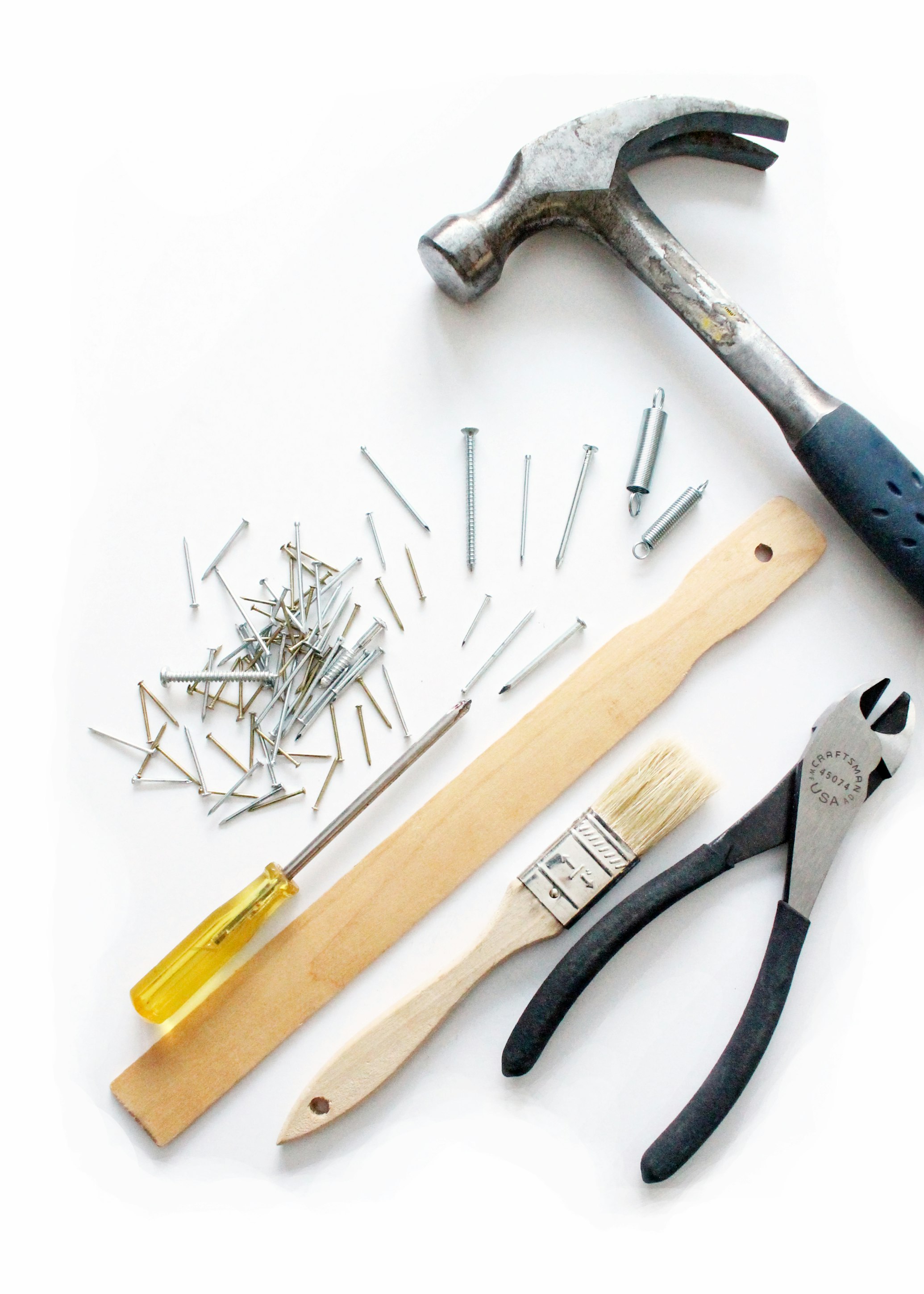
- Combination Pliers (8-inch insulated - Taparia): For gripping hex nuts, bending sheet metal, twisting wire, and cutting cables.
- Claw Hammer (200g–300g head with steel/fiberglass shaft): Balanced for driving steel nails, pulling bent nails, and seating plastic wall plugs (*gitti*).
- Multi-Bit Ratcheting Screwdriver Set: With interchangeable magnetic bits (Phillips PH1/PH2/PH3, Slotted/Flathead 3mm/5mm/6mm, and Torx bits).
- 1000V Insulated Electrician Screwdriver (Taparia / Stanley): Certified safety tool for switchboard terminals.
- 5-Meter Steel Measuring Tape: With metric/inch dual markings and auto-lock for furniture and wall layout.
- Heavy-Duty Utility Knife (Box Cutter with snap-off blades): For cutting drywall, trimming plastic tubing, and stripping wire insulation.
2. Essential Fasteners & Wall Plugs
- Multi-Compartment Hardware Box: Stocked with assorted nylon wall plugs (*gitti* in 6mm, 8mm, and 10mm sizes).
- Assorted Drywall & Wood Screws: Zinc-plated Phillips screws (1-inch, 1.5-inch, and 2-inch lengths).
- Hardened Steel Masonry Nails: 1-inch and 1.5-inch for direct brick/plaster hanging.
- UV-Stabilized Black Nylon Cable Ties (Zip Ties): 4-inch and 8-inch for wire bundling and quick fastening.
3. Adhesives, Sealants & Lubricants
- M-Seal Epoxy Putty: The legendary two-part seal for emergency pipe leaks, drain joints, and bathroom sealing.
- Araldite Standard (Epoxy Adhesive): High-strength permanent bonding for wood, glass, ceramics, and metals.
- PVC Electrical Insulation Tape (Steelgrip / Anchor): Flame-retardant vinyl tape for insulating electrical joints.
- Fevicol SH (Synthetic Resin Wood Adhesive): For loose chair joints, peeling laminate edges, and carpentry fixes.
- WD-40 Multi-Use Penetrating Spray (100ml / 200ml can): For silencing squeaky door hinges, loosening rusted bolts, and displacing moisture.
4. Electrical Testing & Personal Safety
- Neon Line Tester (Taparia 500V): Essential diagnostic tool for verifying live Phase/Line voltage before touching switchboards.
- Clear Polycarbonate Safety Goggles: Vital eye protection against flying plaster chips during drilling or hammering.
- Rubberized Cotton Work Gloves: For hand protection when handling rough wood, sharp wires, or adhesives.
- Compact LED Flashlight: Dedicated battery torch stored right inside the toolbox for power cut emergencies.
5. Storage & Organization
- 16-Inch Heavy-Duty Plastic Toolbox: Featuring a removable top tray for small bits and a spacious bottom compartment for hammer, spanner, and power drills.
⚠️ Safety & Tool Storage Warnings: Read Before Building Your Kit
- Never use non-insulated screwdrivers for electrical work: Always verify with a neon line tester and use certified 1000V insulated screwdrivers. Never touch copper conductors without switching off the main DB box MCB.
- Store cutting blades safely out of reach of children: Keep snap-off utility knives locked with the blade fully retracted, and store your toolbox on an elevated shelf away from toddlers.
- Never use tools as makeshift substitutes: Using combination pliers as a hammer or a flathead screwdriver as a wood chisel destroys the tool and causes severe hand slip injuries.
- Store tools in a dry, ventilated area away from humidity: Never keep your toolbox under the kitchen sink or in a damp bathroom cabinet. Monsoon moisture rusts steel tools and ruins adhesive shelves.
- Keep M-Seal and Araldite hermetically sealed: Reseal epoxy tubes tightly after use to prevent curing inside the packaging.
Step-by-Step Practical Guide to Assembling Your Toolkit
Step 1: Start with the "Core Big 5" First
If you're building a kit on a budget, purchase the five most frequently used tools first: an 8-inch adjustable spanner, combination pliers, claw hammer, multi-bit screwdriver set, and electrical insulation tape. These five tools alone solve over 60% of common household breakdowns.
Step 2: Add Electrical Safety & Diagnostic Essentials
Equip your kit with a **Taparia neon line tester** and an **insulated 1000V screwdriver**. Familiarize yourself with how a line tester works (the neon bulb illuminates when touching the live Phase line while your thumb rests on the metal top cap).
Step 3: Stock the Indian Home "Adhesive Trio"
Pick up a packet of **M-Seal epoxy putty**, a twin-pack of **Araldite epoxy adhesive**, and a 100ml spray can of **WD-40**. Together, these three handle stuck locks, water leaks, and broken household decor.
Step 4: Build a Multi-Size Fastener Organizer
- Buy an inexpensive multi-compartment transparent plastic organizer box.
- Sort your plastic *gitti* wall plugs into 6mm (red/white), 8mm (yellow/blue), and 10mm (grey) compartments.
- Pair each plug size with matching gauge zinc-plated wood screws.
- Add a dozen 1-inch concrete masonry nails and a bundle of 6-inch cable ties.
Step 5: Consolidate Everything into One Dedicated Toolbox
- Place heavy items (claw hammer, spanner, pliers, drill) at the base of the toolbox.
- Place screwdrivers, measuring tape, and utility knives in the middle tier.
- Store fasteners, testers, fuses, and electrical tape in the top partitioned organizer tray.
- Designate a permanent, accessible home for the toolbox (e.g. the utility balcony cabinet or hallway cupboard).
Step 6: Conduct a Quarterly Maintenance & Restock Check
Every 3 months, perform a quick 5-minute toolbox health check:
- Spray a light film of WD-40 onto pliers joints and spanner worm-gears, wiping off excess with a rag to prevent monsoon oxidation.
- Check that M-Seal and Araldite packets remain soft and pliable.
- Restock depleted screw and wall plug compartments.
Troubleshooting Common Mistakes
- "Cheap roadside tools stripped their screws and broke on the first use."
Roadside duplicate tools use unhardened mild steel that deforms instantly. Invest in trusted Indian industrial brands like Taparia, Stanley, Bosch, or Ajay — a ₹250 Taparia spanner will last 20+ years. - "Tools keep going missing because family members misplace them."
Enforce the "Toolbox Rule": tools must be returned to the dedicated box immediately after a repair is completed. Never leave tools scattered in random kitchen drawers. - "Steel tools developed brown surface rust during the monsoon season."
Wipe all rusted surfaces with steel wool dipped in WD-40, then leave a microscopic protective oil film on the steel. Store a small packet of silica gel inside the toolbox to absorb ambient moisture. - "The M-Seal hardened into a solid rock before I could use it."
M-Seal comes as two separate resin and hardener sticks. Wrap unused portions tightly in their original plastic film inside an airtight ziplock bag. Once mixed together, you have exactly 15 minutes before curing begins. - "I bought a drill but rarely use it."
If you only hang 1 frame every two years, borrowing a drill from a neighbor or renting one is smarter. But if you have 3+ rooms to furnish, owning a budget 500W impact drill (Bosch GSB 500 or Cheston 13mm) pays for itself in a single weekend.
When to Call a Professional Contractor Instead
While your home toolkit empowers you to handle 90% of minor repairs, always hire certified professionals for:
- Main Electrical Distribution Boards (DB Box): Installing 3-phase circuits, rewiring burnt busbars, or upgrading 63A RCCBs.
- Concealed Plumbing Pipe Bursts: Jackhammering bathroom tiles to repair broken CPVC main lines inside concrete slabs.
- Structural Masonry Cracks: Wide diagonal settling cracks through RCC columns and load-bearing lintels.
- Major Appliance Overhauls: Recharging AC compressor refrigerant or repairing inverter PCB motherboards.
Wrapping Up
A well-organized home toolkit is the cornerstone of a self-sufficient, stress-free household. By stocking trusted hand tools, safety testers, and quality adhesives in a single grab-and-go box, you'll tackle everyday repairs in minutes and maintain your home in peak condition with total confidence.
Now that your toolkit is complete, put your tools to work with our step-by-step guides on how to drill masonry walls safely, hanging photo frames and heavy mirrors level, fixing a running flush tank, and replacing damaged modular switches.
Need a Master Carpenter, Electrician, or Plumber for Major Home Projects?
When a repair exceeds DIY scope — from modular kitchen installations and electrical rewiring to bathroom plumbing overhauls — Carpenterwala connects you with verified, background-checked trade experts across Bangalore in Whitefield, Koramangala, Indiranagar, and HSR Layout.

Carpenterwala Editorial Team
Verified SpecialistHome Improvement Advisors
Our team of experienced coordinators and service verifiers writing expert tips for local Bangalore homes.
⚖️ DIY vs. Hiring a Professional: When to Call an Expert
✓ Safe to DIY
- Minor screw tightening or loose hinge lubrication
- Basic component replacement with matching dimensions
- Routine surface touch-ups and non-structural adjustments
⚠️ Hire a Verified Pro
- Structural woodwork warping, masonry drilling, or rotted frames
- High electrical voltages, MCB trips, or water line pipe bursts
- Multi-room installations requiring specialized power equipment
💬 Comments (0)