📑 Table of Contents (9 sections) — Tap to expand
⚡ Quick Takeaway (Position-0 Summary)
To unclog a kitchen sink drain full of grease without chemicals, pour boiling-hot water down the drain first to soften buildup, follow with half a cup of baking soda then half a cup of vinegar, let the mixture fizz and sit for 30 minutes to an hour, then flush with more hot water — repeating if the drain is still slow.
Why Kitchen Sink Drains Choke with Grease in Indian Homes
Your kitchen sink that used to drain instantly now takes noticeably longer, with water pooling and slowly disappearing rather than flowing straight down — and you know exactly why, because cooking oil and food residue have been going down that drain for months or years. Grease is one of the most common causes of kitchen sink clogs specifically because of how it behaves once it enters the cooler pipe environment: hot cooking oil or ghee poured down the sink flows easily while hot, but as it travels through the pipe and cools, it solidifies, sticking to the pipe walls and gradually narrowing the passage.
This is a near-universal issue in Indian kitchens given how much cooking involves oil and ghee, and the natural habit of rinsing pans and dishes with warm water after cooking, which pushes residual grease down the drain along with food particles that then stick to that grease coating. Over time, this creates a buildup that acts almost like a partial dam inside the pipe — narrowing the passage enough to slow drainage significantly, even before it becomes a full blockage. The good news is that a grease clog, unlike a solid physical obstruction, responds very well to a combination of heat (to soften and melt it) and a chemical reaction (baking soda and vinegar) that helps break down and loosen the buildup from the pipe walls, all without needing any harsh commercial chemical drain cleaners.
What You Will Need
Prepare these essential tools and materials before beginning the natural unclogging process:
Essential Tools:
- A kettle or pot: For boiling water.
- A plunger (cup-type): As a backup if the baking soda method alone isn't sufficient.
- Rubber gloves: For safety and protection when handling wastewater and grease residue.
Materials / Consumables:
- Baking soda (cooking soda): Approximately half a cup, available at any grocery store.
- White vinegar: Approximately half a cup of regular white vinegar.
- Boiling water: Freshly boiled water for pre-flushing and final clearing.
- A wet cloth: To cover the drain opening during the fizzing reaction.
⚠️ Critical Safety Warnings
Read this before you start:
- Never mix baking soda and vinegar with leftover commercial chemical drain cleaner: Combining different chemical drain treatments can produce harmful fumes or unpredictable reactions. If a chemical cleaner was used recently, flush thoroughly with plain water first and wait a few hours before trying this method.
- Handle boiling water with extreme care: Pour it steadily and directly into the drain opening rather than splashing it, to avoid scalding yourself, and be cautious if your sink has any PVC components immediately at the drain opening, since repeated very hot water exposure can occasionally soften PVC over time (though a single treatment is generally fine).
- Wear rubber gloves throughout: Since you may be handling standing water and grease residue that has built up in the pipe.
- Check for deeper sewer or venting blockages: If the smell coming from the drain is unusually strong or sewage-like even before you start, this might indicate a deeper blockage or venting issue beyond a simple grease clog, and may need more thorough investigation (see our drainage and P-trap guide) rather than assuming this treatment alone will resolve it.
Step-by-Step Practical Execution Guide
Follow these 10 practical steps to dissolve congealed grease and restore free-flowing drainage:
-
Step 1: Remove Standing Water
If there's water sitting in the sink from the slow drainage, bail out as much as possible with a cup or cloth first — the treatment works more effectively on a relatively empty drain rather than one already full of standing water. -
Step 2: Pour Boiling Water Down the Drain First
Carefully pour a kettle or pot of boiling water directly and steadily into the drain opening — this initial hot water flush helps soften and begin melting the grease buildup before you introduce the baking soda and vinegar. -
Step 3: Pour Baking Soda Into the Drain
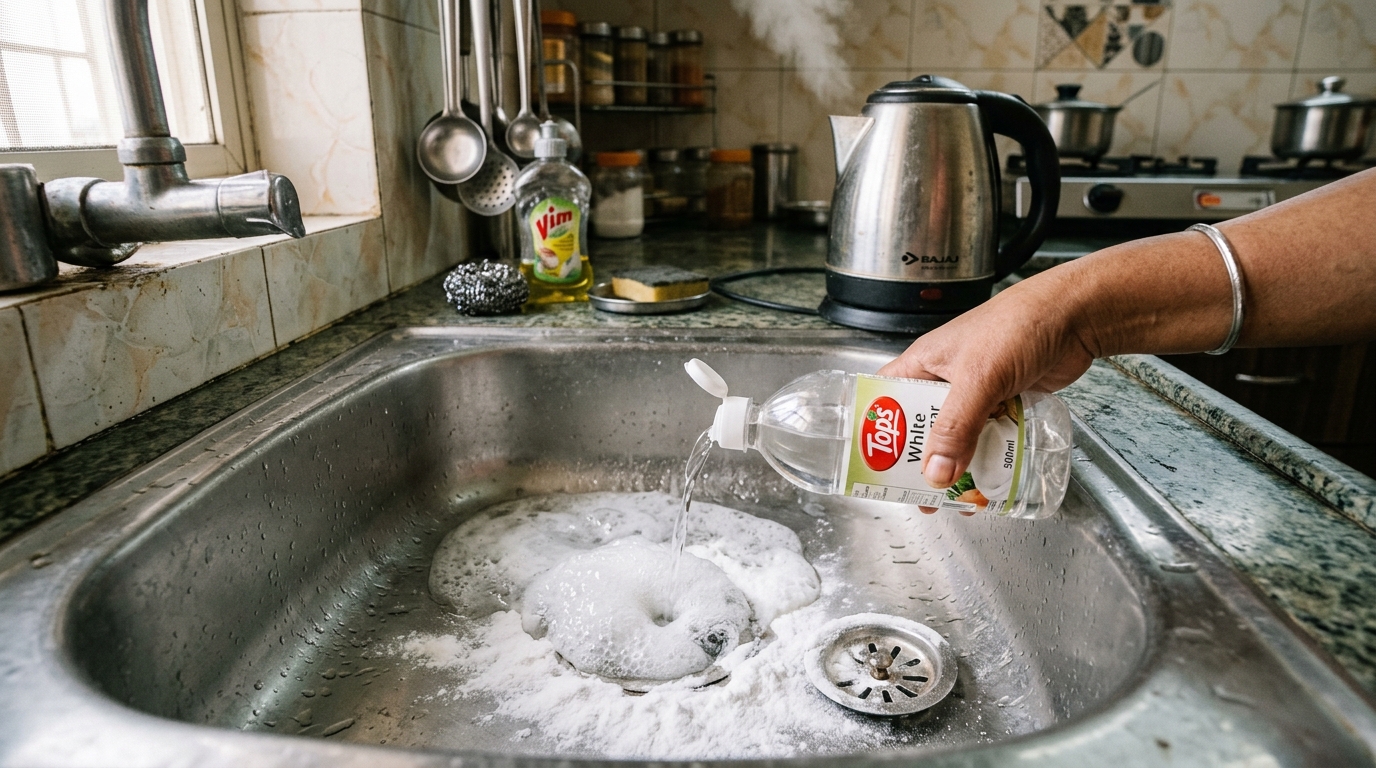
Pour approximately half a cup of baking soda directly into the drain opening, letting it settle into the pipe. -
Step 4: Follow With Vinegar
Slowly pour half a cup of white vinegar into the same drain opening — you'll immediately notice a fizzing reaction as the two ingredients react together. -
Step 5: Cover the Drain Opening
Immediately place a wet cloth or the sink's drain stopper over the opening — this keeps the fizzing reaction's pressure working down into the pipe toward the clog, rather than simply escaping upward and out through the drain opening. -
Step 6: Let It Sit and React
Allow the mixture to sit and work for at least 30 minutes — for particularly stubborn, long-standing grease buildup, extending this to a full hour or even leaving it overnight gives even better results. -
Step 7: Flush With More Boiling Water
After the sitting period, remove the cloth cover and pour another kettle or pot of boiling water down the drain — this final hot water flush helps carry away the now-loosened grease and residue that the baking soda and vinegar reaction has broken down. -
Step 8: Test the Drainage
Run the tap normally and observe how quickly water now drains — if it's flowing noticeably faster and freely compared to before, the treatment has worked. If it's improved but still somewhat slow, repeat the full process once more. -
Step 9: Use a Plunger for Stubborn Remaining Blockage
If drainage is still noticeably slow after one or two rounds of the baking soda and vinegar treatment, fill the sink with a couple of inches of water and use a cup-type plunger, creating a seal over the drain and pumping firmly 10-15 times to help physically dislodge any remaining stubborn material. -
Step 10: Establish a Regular Maintenance Routine
Once drainage is restored, consider pouring hot water (and occasionally a baking soda treatment) down the kitchen sink drain weekly as ongoing maintenance, which prevents grease from building up to a problematic level again in the first place.
💡 Pro-Tips From the Field
- Dispose of cooking fat in the trash, not the sink: The single biggest prevention step is simply not pouring grease down the drain in the first place — let used cooking oil cool in a separate container and dispose of it in the regular trash rather than washing it down the sink, since this one habit change prevents the vast majority of future grease-related clogs from ever developing.
- Pre-wipe oily cookware with paper towels: For particularly greasy pots and pans, wipe out the bulk of the oil with a paper towel before washing — this simple pre-wash step dramatically reduces the amount of grease that actually enters your pipes with each wash, compared to washing a heavily oiled pan directly.
- Periodically service the under-sink bottle trap: If your kitchen sink has a bottle-trap accessible from underneath, periodically opening and physically cleaning it out (see our related drain and P-trap guide) catches grease buildup at its earliest, most accessible point, often preventing it from ever reaching further down the pipe where it's harder to treat.
Troubleshooting Common DIY Mistakes
- "I did the treatment once and drainage improved slightly but is still slow."
Long-standing, heavy grease buildup often needs more than one treatment cycle to fully clear — repeat the full baking soda, vinegar, and hot water process a second or even third time, allowing the full sitting period each time rather than rushing through repeated quick attempts. - "The drain smells better but is still slow, and I've done the treatment several times."
At this point, the blockage may be more physical (hardened, thick grease deposits) than something baking soda and vinegar alone can fully dissolve — this is when opening and manually cleaning the trap (see our related drain cleaning guide) becomes the more effective next step, physically removing the buildup rather than continuing to rely on chemical treatment alone. - "I poured boiling water and now there's a slight leak at a pipe joint under the sink."
This can occasionally happen if a joint's washer was already worn and the hot water exposure caused slight expansion revealing the existing weakness — check and address that joint separately using our leaking drain pipe joint guide, since this is now a distinct issue from the original clog.
Conclusion & Related Reads
A grease-clogged kitchen sink is one of the most satisfying "no chemicals needed" fixes in home plumbing — patience with the sitting time and prevention going forward (not pouring oil down the drain) genuinely solves this problem for good in most cases.
Related reads on CarpenterWala:

Rajesh Sharma
Verified SpecialistMaster Carpenter & Woodwork Consultant
Over 15 years of custom woodworking, furniture restoration, and modular interior fittings experience in Bangalore.
⚖️ DIY vs. Hiring a Professional: When to Call an Expert
✓ Safe to DIY
- Minor screw tightening or loose hinge lubrication
- Basic component replacement with matching dimensions
- Routine surface touch-ups and non-structural adjustments
⚠️ Hire a Verified Pro
- Structural woodwork warping, masonry drilling, or rotted frames
- High electrical voltages, MCB trips, or water line pipe bursts
- Multi-room installations requiring specialized power equipment
💬 Comments (0)